
Beyond Compliance: Strategic Advantages
A building’s emergency response shapes occupant trust. Digital AOR systems strengthen that trust by ensuring fast, coordinated communication and transparent reporting.


SPONSORED
By Eaton | February 3, 2026
Read Time: 5 Minutes

Every year, thousands of building occupants rely on areas of refuge (AOR) during emergencies. But as facilities grow more complex and expectations for safety rise, traditional AOR systems aren’t always enough. Emergency preparedness has shifted from a compliance requirement to a strategic priority – and that means life safety systems must evolve.
For decades, AOR solutions have been essential for supporting individuals who cannot evacuate quickly. Today, however, the environments they protect—hospitals, high‑rise residential towers, hotels, and modern office buildings—demand systems that are smarter, more scalable, and more connected. Digital AOR systems represent that next evolution, merging reliable communication with visibility, data, and future‑ready performance.
Traditional AOR solutions—designated safe locations for individuals who cannot evacuate quickly—have served an important role for decades. But in hospitals, high-rise residential buildings, hotels, and modern office towers, the demands on safety are broader, more dynamic, and data-driven. Digital AOR systems represent the next evolution, combining reliability with visibility and compliance with resilience.
Today’s built environment more interconnected than ever. Facility leaders must balance emergency readiness with tenant experience, operational efficiency and reputational risk. At the same time, regulatory codes and standards continue to expand (such as ADA, NFPA 101 and IBC), pushing systems beyond minimum compliance.
Modern life-safety infrastructure must do more than meet the code, they must perform reliably under stress, integrate seamlessly with other building systems and deliver actionable information in real time. Digital AOR platforms help facilities teams rise to that challenge.
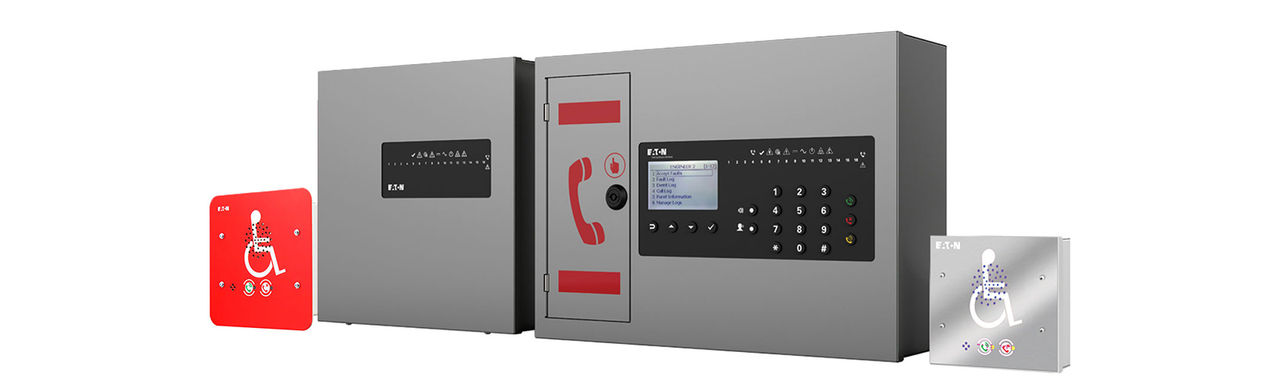 Eaton VoCall 16 US AOR Product Family
Digital AOR systems enable continuous monitoring, automated health checks and proactive alerts so facility teams and security operations centers gain instant insight into system status via centralized dashboards. This helps reduce downtime, eliminate surprises during emergencies, and shorten time-to-resolution for maintenance.
During a crisis, clarity is everything. Communication must be clear, intelligible and immediate. Digital AOR systems elevate voice quality, prioritize traffic, support hands-free stations, and automate logging with escalation pathways – all while integrating with on‑site security, off‑site dispatch or a centralized command center to ensure no call goes unanswered.
A modern AOR system should never operate in isolation. The strongest solutions integrate with fire alarm systems, mass notification, access control, and building management systems (BMS). This creates a unified response, enabling coordinated action across lighting, doors, cameras, HVAC and alerts for safer, faster responses.
IP‑based architectures allow organizations to expand or reconfigure system layouts without rewiring entire buildings. For multi-tenant environments and multi-campus organizations, digital AOR simplifies standardization and governance while controlling costs.
A building’s emergency response shapes occupant trust. Digital AOR systems strengthen that trust by ensuring fast, coordinated communication and transparent reporting.
Facility teams manage hundreds of assets daily. Teams can shift from reactive troubleshooting to proactive reliability with digital AOR solutions that reduce manual on-site testing through:
Digital records capture detailed information that helps teams strengthen readiness and refine response strategies. With AOR, post-incident reviews benefit from:
With evolving safety codes and accessibility requirements, a digital core enables adaptation for easier updates, new integrations and innovative capabilities, such as:
High-acuity environments with diverse mobility needs require dependable communication and clear coordination across floors and wings.
Buildings with elevator and escalator systems benefit from robust, scalable refuge communication that’s simple to use and easy to test.
Protecting guests and staff, preserving brand reputation, and coordinating large properties demand integrated, intelligible systems.
Mixed-use, multi-tenant settings need centralized visibility and standardized processes across multiple buildings.

Forward‑thinking organizations are moving beyond “code minimum” toward resilient, integrated and data‑informed safety practices. Digital AOR systems don’t just check a compliance box, they elevate emergency preparedness, strengthen occupant trust and give operations teams the visibility they need to act decisively.
Wesco and Eaton Wheelock bring together the solutions, expertise and supply‑chain strength required to deliver those results at scale. The Eaton Wheelock VoCALL 16 US and other IP‑based AOR solutions provide reliable, code‑compliant communication designed for modern facilities. And Wesco complements this with a robust Innovation Partner Ecosystem and nationwide supply chain ensure predictable lead times, streamlined deployment, and long‑term support.
Whether you’re designing a new build or modernizing legacy infrastructure, this partnership helps integrators and facility teams:

ABOUT THE SPONSOR
This article was brought to you in partnership with Eaton.
Eaton is a global power management company dedicated to improving quality of life and protecting the environment. By operating sustainably and helping customers manage power more efficiently, Eaton supports the shift toward electrification and digitalization, tackling today’s most urgent energy challenges.