Ninety-six fibers per rack unit is an optimal manageable density, accommodating up to 3,456 fibers in a cabinet. There are ultra-high-density enclosures available today that can raise that number to more than 5,000 fibers per cabinet. However, managing cords and trunks in such an ultra-high-density application with traditional rack enclosures can become challenging. There is little room for adequate slack management, and fiber bend radius become a concern, especially for trunks entering the cabinet.
Distribution frame solutions are most often used by carriers in central offices, where tens of thousands of fibers are being managed. However, in recent years, data centers have begun adopting the frames. They are capable of patching thousands of fibers and are designed with cable management to alleviate the challenges of higher densities.
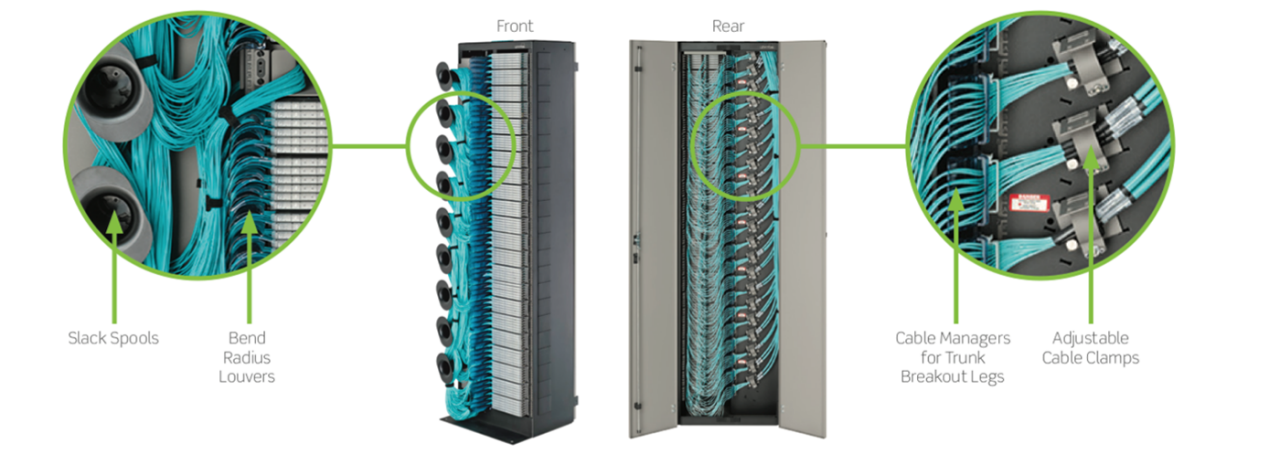
For example, the Leviton HDX Fiber Distribution Frame can patch 3,168 LC fibers or 15,552 MTP fibers on only one 2' x 2' data center floor tile (for raised floor applications) and includes vertical and horizontal cable managers integrated into the frame. The fiber density can easily double or triple based on occupying the same floor space as a traditional cabinet. It includes slack spools and cable clamps for properly routing cords and trunks, and unique patch decks with trays that handle horizontal cord management.