


SPONSORED
The 3 Keys to Designing Successful Tech-Enabled Education
By LG Electronics | November 1, 2024
Read Time: 5 Minutes

Classroom technology is a crucial element that supports the daily needs and plans of educators and students across the United States. With a wide variety of devices, platforms, and applications assisting with information gathering, presentations, notes, textbook content, group work, remote learning, in-school messaging, and alerts, the focus is broadening.
As we endeavor to design the future of K-12 classrooms to best serve today’s young students, leveraging technology also ensures learning environments are relevant to students’ modern life experiences.
To maximize the educational returns on these technology investments, school districts and technology buyers should create consolidated plans that utilize future-ready solutions with a focus on boosting student achievement.
Engagement is Key to Outcomes
Educators have long understood that when education is fun, exciting, or interesting for students, learning outcomes can improve. As technology use has increased, engagement has become a new way to describe classroom behavior, with increased engagement correlating with higher achievement.
According to a comprehensive 2020 report from the Brookings Institution, “...the evidence indicates that technology may accelerate student learning when it is used to scale up access to quality content, facilitate differentiated instruction, increase practice opportunities, or when it increases learner engagement.” The report goes on to note that identifying how new technologies may alter interactions between educators, learners and content is crucial to successful implementation.
Add to that a growing body of evidence suggesting younger generations are exhibiting decreased attention spans, and it’s clear the role of technology in creating engaging K-12 educational environments cannot be overstated.
Still, investments in technology don’t automatically produce positive change and encourage greater engagement, so it’s vital that schools maximize the utilization of every technology’s capability. It’s not enough to simply add shiny new toys and expect same-day results without considering content, delivery, and interactivity.
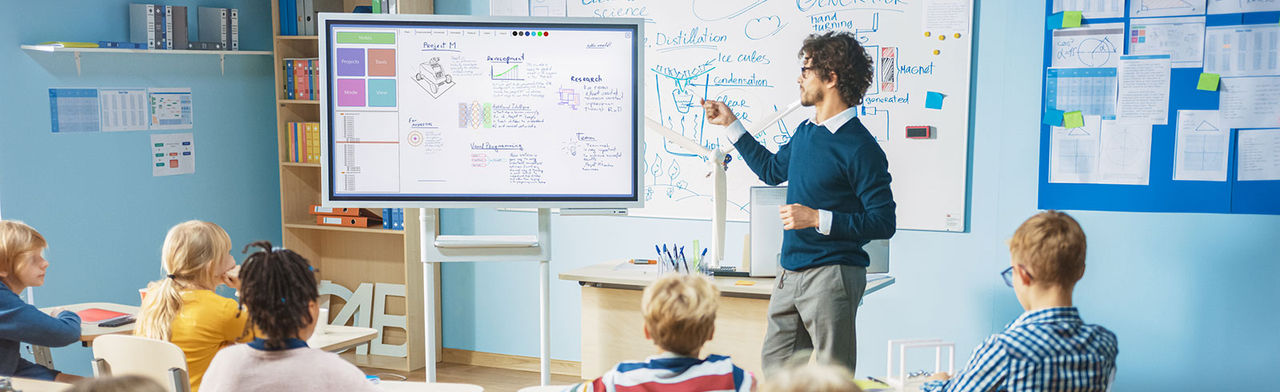
For example, adding a digital whiteboard in a classroom doesn’t change experiences or engagement if it’s used the same way as a blackboard. Without utilizing advanced capabilities like screen sharing, digital annotation, presentation saving, file sharing, or access to curriculum apps and multimedia resources, students are offered little in the way of engagement to connect their educational experiences with the rest of their highly digital modern lives.
If You Make It Simple, They Will Come
When people are asked to name the most important aspects of virtually any technology, ease of use is at or near the top of the list. If a new device is even a little frustrating to use or has a steep learning curve, chances are it will soon be gathering dust, with little to show for the investment. In a K-12 environment, that effect can be even more pronounced since time is strictly scheduled, and no teacher wants to deal with interruptions or delays.
One way to enhance simplicity for IT staff, technology managers, educators, and students is to choose a solution or brand and make it the standard, so experiences are the same throughout a school or a district. Using consistent equipment enables teachers and students to attain mastery, versus a non-coordinated system under which everyone must learn new procedures for different classes or different grade levels.
Standardized solutions can also improve backend processes and increase capabilities, such as enabling in-room displays to function as a centrally controlled digital signage network or adding new options like emergency message overrides and auto startup/shutdown across entire buildings. Additionally, standardization allows tech managers to troubleshoot issues, manage replacements, initiate software updates, deploy new features, and ensure lesson compatibility for each room more easily.
Schools using flexible technologies such as whiteboards or projectors on moveable carts can maximize the value and use of each investment. What’s more, the easier they are to set up and use, the more teachers will want to employ them in their lessons. Of course, any solutions integrating with personal devices also need to be widely compatible with the most popular ecosystems including Android, iOS, Windows, and MacOS to ensure devices can connect and utilize full functionality.
Finding Value in The Long View
We’ve established that technologies that are consistent, easy to use, offer increased engagement, and provide value-added features benefit everyone. However, there’s one additional aspect that can affect all these concerns: time. The accelerated evolution of technology can pose unique problems like the recent explosion of artificial intelligence software used to draft essays. Individual organizations have scrambled to address changing capabilities and expectations while official standards have failed to keep up.
When thinking of a technology investment and what it means for the stakeholders and users, decision-makers should attempt to maximize the flexibility and future capabilities of a system, which includes choosing the right components and partners. Buyers may be able to reduce total costs by using last year’s TV model or foregoing a wireless version, but those choices are likely to reduce usable lifespan and require more frequent replacements due to becoming incompatible with third-party technology advancements.
Procuring technologies from a trusted brand can also ensure that they will still be there in five, ten, or 20 years, making it easier to service, upgrade, and expand over time. As technologies continue to supplant textbooks, libraries, and other staples of in-school education, having a trusted relationship with a supportive technology provider may become as important to daily business as having reliable electricity.


This article was brought to you in partnership with LG.
LG takes pride as the leading provider of innovative, flexible, and feature-packed commercial display products. Boasting cutting-edge features and modern design, LG Commercial Displays redefines a whole new way of delivering an ultimate viewing experience to enhance engagement with the audience. From Ultra UD OLED monitors for a digital signage network to hospitality TVs for in-room entertainment solutions, LG Commercial Displays offer a variety of display products to meet the demands of every business environment.
You might also like
-
Collaboration in the Conference App Era June 16, 2023 Although organizations are investing in Pro A/V solutions to improve collaboration, hybrid workers may still feel that their contributions are not heard or valued. Wesco’s Phil Langley discusses why meeting equity matters and shares three tips for delivering a seamless and equitable meeting experience for all ...Article
-
Conferencing and Collaboration Simplified: AV as a Service May 25, 2023 Today’s hybrid work schedules demand collaborative technology that brings in-person and remote workers together. Wesco’s Phil Langley weighs the pros and cons of choosing a subscription-based Pro A/V as a service (AVaaS) model over a traditional capital expense or hybrid Pro A/V approach.Article

-
Data Center AV Solutions: What You Need to Know September 29, 2021 When you think about a data center, you might think about servers, switches, cooling, cabling, connectivity, access control and the like. What about audio/visual (AV) solutions? The appropriate data center AV solutions help provide the physical security and access to core information you want and need...Article