

SPONSORED
Utility Strategies for Rapid Disaster Response and Recovery
By TE Connectivity | November 10, 2025
Read Time: 4 Minutes
As severe weather events and wildfires grow more frequent and intense, utilities across North America are under increasing pressure to safeguard critical infrastructure and maintain power reliability. Nearly 80% of major U.S. outages since 2000 have been weather-related1, with storms, wildfires and hurricanes costing utilities billions in restoration, fines and settlements. At the same time, nearly 70% of the grid is more than 25 years old2, leaving utilities to balance system hardening with modernization. For utilities, the stakes are high: each hour of outage can cost as much as $100,0003, not including reputational, and regulatory risks. This growing reality calls for proactive planning, durable technology, and trusted partnerships that empower utilities to prevent, respond and recover more effectively.
Hardening the Grid Before Nature Strikes
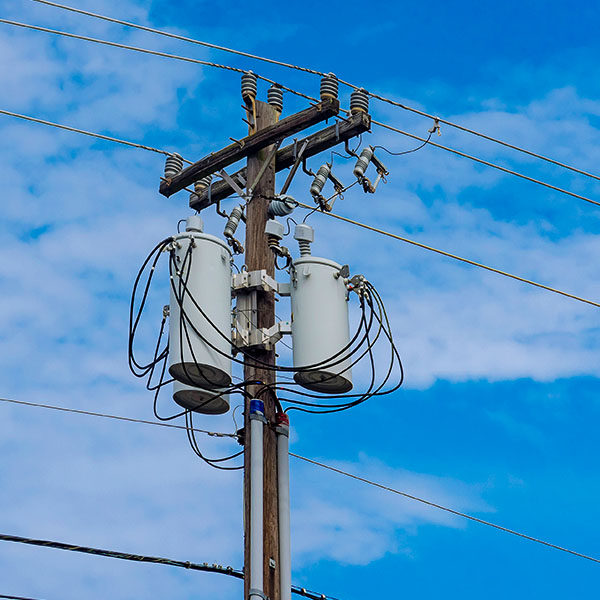
Prevention begins with resilience strategies that mitigate risks before the next crisis. We work with TE Connectivity to provide utilities with high-performance overhead solutions engineered for long-term, ‘install-and-forget’ reliability. This includes pre-stocking critical components such as connectors and switches to protect against supply chain disruptions, offering insulating covers with advanced UV and tracking and erosion resistance (TERT) ratings to defend against wildlife and vegetation-related faults, ensuring compliance with IEEE, ASTM, IEC, and APLIC standards.
Wildfire Mitigation
Wildfires continue to represent one of the most pressing threats to grid reliability. Recent years have shown the devastating financial and operational impact utilities face: from multibillion-dollar claims to regulatory penalties tied to fire damage. Vegetation management also plays a vital role. By insulating conductors and connectors, utilities reduce the potential for flashovers and wildfires sparked by vegetation contact. These proactive measures not only minimize liability but also create long-term operational savings by extending maintenance cycles and reducing emergency repairs.
We help utilities strengthen their wildfire mitigation strategies with proven overhead protection solutions and advanced materials science. By deploying insulating covers and wildlife deterrents, utilities can minimize phase-to-phase and phase-to-ground faults caused by animals or vegetation. Pole wraps, nesting diverters, and conductor covers serve as first lines of defense, helping to prevent sparks in high-risk environments.
Material durability also plays a critical role. TE Connectivity designs covers that meet stringent fire resistance and TERT standards to withstand extreme conditions. These solutions not only reduce the risk of ignition but also extend product life cycles to more than 40 years. By combining vegetation management with advanced insulating technologies, utilities gain both immediate risk reduction and long-term reliability.
Detecting Faults in Real Time
When storms strike, rapid fault detection is critical. Utilities that rely solely on manual inspections risk days of extended outages, particularly when flooding or debris makes access difficult. We collaborate with utilities to bring TE Connectivity’s smart grid technologies to their networks, including fault indicators for both local visual alerts and remote SCADA communication. These tools instantly identify fault locations across overhead and underground networks, allowing crews to isolate damage quickly and reroute power to critical infrastructure such as hospitals and water treatment plants.
Digitalization further strengthens outage management. Smart grid monitoring reduces System Average Interruption Duration Index (SAIDI) metrics, delivering measurable improvements in reliability. By combining detection with real-time communication, utilities can restore power faster while reducing operational costs.
Responding with Precision
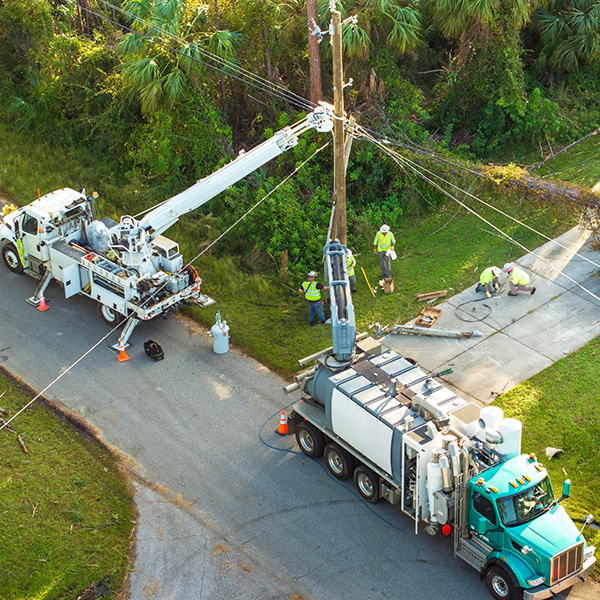
Restoration is not only about speed but also safety and efficiency. In-line disconnect switches allow crews to sectionalize the grid after damage occurs. By isolating faulted segments, utilities can restore power to unaffected areas within hours rather than days, while ensuring crews work in safer, clearly de-energized zones. This targeted approach to storm response minimizes widespread outages and helps utilities deliver on their promise of reliability to customers.
Mutual aid networks, training partnerships, and advanced tools all play a role in ensuring that utilities have the workforce and resources ready to respond. But equipping those crews with sectionalizing and detection solutions is what enables them to act with confidence and restore service faster.
Restoring Confidence Through Innovation
Every connection counts when utilities face the challenges of extreme weather, wildfire risks, and growing demand. Through our partnership with TE Connectivity, Wesco provides storm preparation and response solutions engineered for long life and tested to the industry’s highest standards. We help you prevent outages, detect faults in real time, and restore power with speed and safety.

ABOUT THE SPONSOR
This article was brought to you in partnership with TE Connectivity
In partnership with Wesco, TE Connectivity delivers innovative energy solutions for power distribution and transmission across diverse industries and environments. For more than 65 years, they have provided cable accessories, connectors, fittings, meters, insulators and protection equipment wherever grid connectivity and reliability matter.
You might also like
-
Distribution Visibility Delivers Insights To Secure the Last Mile May 15, 2026 Learn how distribution visibility delivers real-time insight at the secondary network level to manage DERs, improve outage response and secure the last mile.Article
-
Power Outage Preparedness for Utilities September 15, 2025 Wesco helps utilities respond to power outages caused by natural disasters and emergencies. Learn how our supply chain services support fast and reliable power restoration.Article
-
Optimizing Supply Chain Processes to Ensure a Reliable Electric Power System July 2, 2025 In a recent podcast, Ian Rice discussed Wesco’s focus on utility and broadband, grid modernization projects, supply chain management, and the benefits utilities gain from partnering with Wesco.Article