




Man in monitoring Center


SPONSORED

Why Smart Sensors Are the Smart Answer for Intelligent Buildings


IPVideo Corporation Logo

An intelligent building can be described as a building that operates with integrated smart devices that help to reduce inefficient procedures. Today, engineers are continually looking for ways to streamline costs by making the most out of building automation systems (BAS). A BAS helps to create efficient operation of building systems, reductions in energy consumption, reduced operating and maintenance costs and increased security.

For a building to be considered “intelligent”, there needs to be seamlessly integrated internet of things (IoT) capabilities, whereby all building systems can be controlled from one main network. The biggest difference between an intelligent building and a standard building is the complexity of the systems and scale of connectivity.

With the invention of the IoT smart sensor, commercial buildings can now offer more efficient and safer environments by monitoring a variety of operational and health factors.

How are intelligent buildings using smart sensors?

A smart building has intelligent control systems and interconnected devices beyond the traditional building structure. There are many different types of buildings and organizations that are integrating their BAS systems with smart sensors. These include schools, health facilities, government buildings, banks, churches, datacenters, commercial buildings, retail stores, etc. Sensor examples include:

  • Environmental sensors – Used to detect a variety of issues such as water leaks, temperature, humidity, open door/window and breaking glass.
  • Light sensors – Designed to monitor light levels and adjust based on natural light to help cut energy consumption.
  • Occupancy sensors - These sensors can establish alerts for various parameters by counting the number of people in a specific location or how many enter and depart an area.
  • Motion sensors – Designed to detect motion and trigger lights to be turned on or off to increase energy efficiency and reduce operational expenditures.
  • Audio sensors – These sensors apply machine learning and can alert when sound levels exceed Occupational Safety and Health Administration (OSHA) levels.

How are smart sensors are improving safety?

A smart sensor device can detect and provide instant alerts to vaping, smoking and possible illicit drug usage in private areas such as bathrooms. It can also detect chemicals in the air and loud sounds such as gunshots or yelling. Spoken keyword sensors can trigger management notifications and help someone in trouble.

Security teams can now pinpoint the location of an incident and address it without collecting any personally identifiable information. If a potential threat or safety issue is detected, the smart sensor automatically issues alerts, directs occupants to the nearest exit and immediately alerts first responders of an emergency. This can significantly reduce response times and save lives.  Sensor examples for security and safety include:

  • Occupancy sensors - Detect the number of people within the sensor’s area and send out an alert about occupancy above the normal parameters.
  • Motion detection sensors - Detect motion and send out a trespassing alert.
  • Sound sensors - Utilize machine learning to detect normal sound levels and can send out alerts if they reach a certain high threshold for a specified period of time.
  • Gunshot sensors - Detect shots fired within a defined area.
  • Audio sensors - Identify pre-programmed spoken keywords such as the word “help.” When one of these keywords is spoken, the emergency communication system the sensor is connected to immediately sends out an alert to security or first responders.
  • Smart sensor devices can also integrate with panic buttons, and some come equipped with LED lighting options that installers can program to show escape routes in red, yellow and green patterns.

HALO Smart Sensor: The Answer for Improved Safety and Efficiency

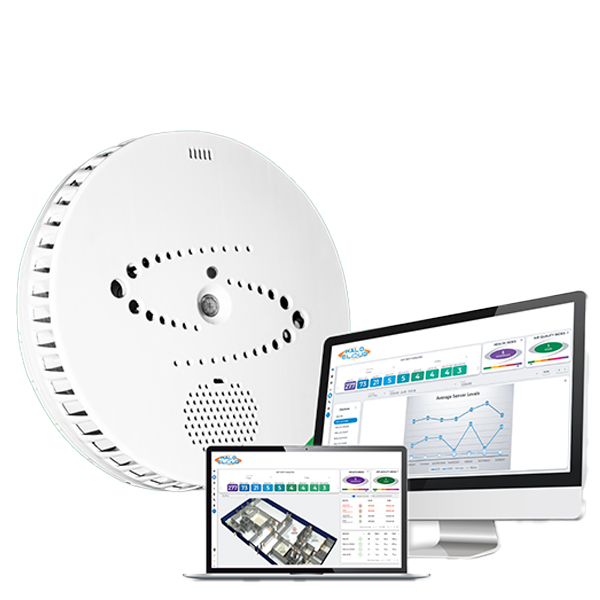
From lighting and temperature control to security, smart sensors are a powerful resource to help building owners improve efficiency and safety. One sensor that stands out from the crowd and is used to solve in the markets discussed above is the HALO Smart Sensor, by IPVideo, A Motorola Solutions Company. The HALO Smart Sensor is a multifunctional health, safety and vape detector device that can be used to monitor privacy areas in any type of facility where cameras are not allowed.


IPVideo Corporation’s HALO IoT Smart Sensor
Shop now on anixter.com.

All without recording any video or audio. Alongside gunshot detection capabilities, HALO can also detect aggressive behavior with its noise sensors. Panic buttons and duress keywords can additionally be used to communicate if there is a threat to safety. It can also monitor levels of chemicals and particulates in a room and send notifications once levels have gone back to normal.

Everywhere there is the need to capture and analyze data, whether for air quality, safety, security or buildings optimization, HALO is setting the foundation to improve operational efficiency and safety for everyone.

For more information about HALO Smart Sensors visit Anixter.com or contact your local Wesco representative.


IPVideo Corporation Logo

ABOUT THE SPONSOR

This case study was brought to you in partnership with IPVideo Corporation.
IPVideo Corporation, a Motorola Solutions company, designs and manufactures solutions for a smarter and safer world. By harnessing the power of the Internet of Things (IoT) and incorporating artificial intelligence (AI) and machine learning, they’re delivering a range of open platform physical security, sensor, and audio/visual solutions that provide maximum flexibility, performance, ease-of-use, and value.


You might also like