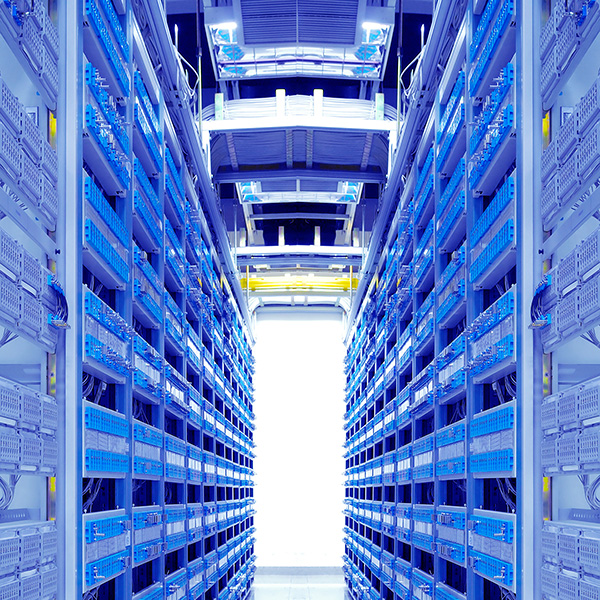
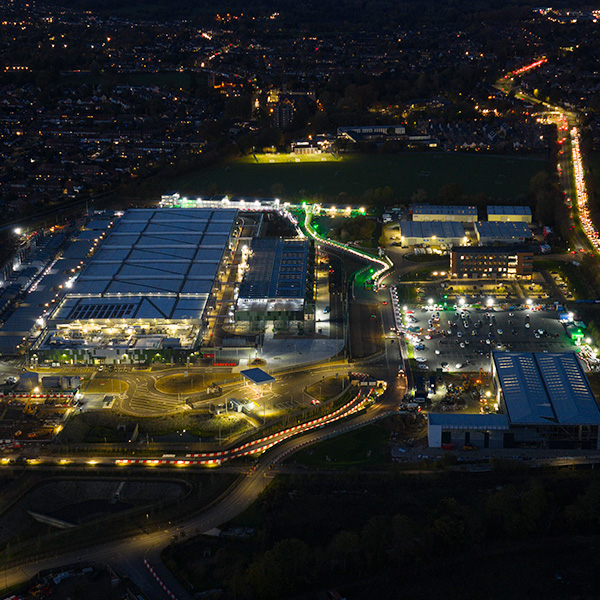
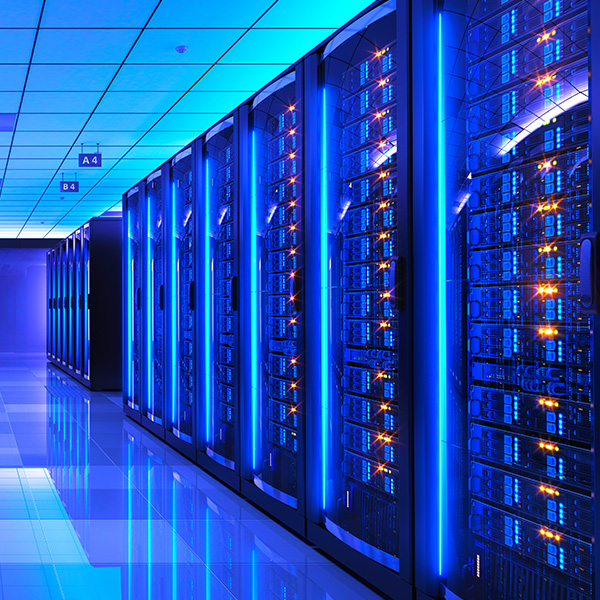
Modern bright data center


ARTICLE

AI Factories: Designing Outcome-Driven Data Center Architecture


In today’s global economy, every watt and processing second counts. Governments need a national artificial intelligence (AI) infrastructure to maintain digital independence and economic leadership. Financial institutions must detect fraud and rebalance risk across global portfolios in real time. Manufacturers aim to catch defective components before they leave the assembly line. Healthcare institutions need to train private, multimodal AI models on genomic, imaging and clinical data without letting any of it leave the organization.

These organizations aren’t asking about AI in theory; they’re demanding AI factories – production-ready, AI-optimized data center solutions that deliver business-critical results at scale. They’re not shopping for GPUs, they’re defining infrastructure requirements that allow them to control their data, own their intelligence workflows and make faster, more accurate decisions than their competitors.

That’s why NVIDIA is building AI factory architecture, and why Wesco, as a strategic partner, is delivering real-world industrial systems that transform unstructured data and electrical power into scalable intelligence for next generation data centers. These AI factories are the digital supply chains that power AI models, which interpret, classify, generate and act on signals from the physical and digital world. They deliver tokens, embeddings, inferences and feedback loops with repeatable precision, and they are already being deployed across industries. Wesco designs solutions to help customers move from whiteboard concept to operational reality with architectures tailored to their outcome goals.

The Ultimate KPI: Outcomes and Tokens per Megawatt

In the race to build AI factories, it’s no longer just about how many GPUs you can stack per square foot, it’s about how much intelligence you can extract per megawatt (MW). Enterprises that optimize their cost-per-MW not only scale faster but maintain sustainable margins by turning infrastructure into a revenue generator rather than a cost center.

Wesco data center services help customers design facilities that optimize both capital cost per MW deployed and operational cost per MW consumed. We leverage our global partner ecosystem to deliver services and solutions across every phase of the data center development as they evolve into AI factories. For customers, cost per MW isn’t just a facilities metric, it directly affects:

  • Model training cost per token/inference
  • Time-to-market for new AI models
  • Total cost of ownership (TCO) over the AI factory lifecycle

When every MW fuels millions of inferences and thousands of model experiments daily, driving down cost per MW becomes a competitive advantage, not just an engineering goal. To capitalize on this advantage for our customers, Wesco data center services incorporate liquid cooling, high-density racks, three-phase power and validated architectures to reduce cost per MW by:

  • Delivering more compute-per-MW for better utilization and power density
  • Reducing cooling costs via advanced thermal designs
  • Avoiding wasted power through efficient distribution and monitoring

Although AI-optimized data centers require higher upfront investment, the result is a 10-20x improvement in compute delivered per square foot and per dollar. The true measure of success is no longer cost per MW alone, but how effectively each MW translates into tokens and business outcomes. Wesco can help customers optimize across all three dimensions. Consider these examples:

  • Financial firms delivering more risk model inferences per second per MW
  • Life sciences companies training more foundation models per MW while keeping costs predictable
  • Manufacturers inspecting more components and reducing defects faster per MW deployed

Why Legacy Infrastructure Is Failing

Traditional IT infrastructure was built for linear workflows, low-density compute and general-purpose tasks. CPU-bound systems, static airflow cooling and slow procurement cycles can’t scale to meet the throughput, thermal load or orchestration complexity required by the dynamic, GPU-intensive workflows of AI factories. Further, cloud-based APIs can introduce latency, reduce customization and limit cost predictability while raising privacy concerns, especially for regulated, sovereign or proprietary data.

Most enterprise AI initiatives stall not because of algorithmic immaturity or lack of business value but because infrastructure was planned without the reality of AI operations in mind. Wesco is changing that trend by designing and deploying AI-optimized data center solutions that aim to collapse timelines, eliminate risk and deliver infrastructure built for AI, not just a retrofit.

Reverse Engineering AI Infrastructure From Desired Outcomes

Rather than starting with hardware specification or capacity forecasts, Wesco begins designing from business objectives and builds AI factory solutions to match. A few use cases from a variety of industries and applications help illustrate the possibilities and potential in this approach:

Financial Industry

A capital markets firm needed to ingest and analyze streaming financial data, retrain risk models continuously and deploy new inference endpoints on a daily cadence. Their infrastructure had to support high-throughput, low-latency compute while isolating workloads across teams to ensure regulatory compliance. Wesco’s solution was a HGX H100 SuperPOD integrated with Spectrum-X Ethernet, BlueField-3 DPU segmentation and Magnum IO data movement pipelined directly into Triton Inference Servers.

Healthcare Industry

A life sciences company sought to train foundation AI models on petascale private health data while guaranteeing that no sensitive information would leak to public clouds. We delivered a full-stack, liquid-cooled HGX cluster with NVSwitch fabric and GPUDirect Storage. These were connected to tiered NVMe arrays across AI data lakes, allowing them to deploy NeMo and MONAI pipelines to accelerate diagnosis, drug discovery and medical documentation in parallel.

Manufacturing Industry

A global manufacturer required vision transformers at the factory edge for real-time defect detection, along with automated model retraining pipelines synchronized with central R&D. Our teams deployed a hybrid AI factory architecture with edge inference units streaming telemetry to a centralized B200 cluster over GPUDirect-enabled links and Spectrum-X networking, enabling both immediate feedback and continuous refinement.

Each of these projects began with a clear business mandate and were reverse engineered to determine the physical infrastructure – spanning down to the rack design, networking layout and node-level cooling plan.

The AI Factory Reference Architecture

Every AI factory adheres to the NVIDIA DGX reference architecture and every stack is adapted to the requirements of the customer, with each deployment validated against both functional and outcome-based acceptance criteria. The architecture typically includes:

Compute Fabric

NVIDIA HGX H100, B200 or GB200 systems deliver high-throughput, transformer-optimized performance, scaling vertically and horizontally using NVLink and NVSwitch for intra-node coherence, while Base Command orchestrates training workloads and resource allocation.

Networking

AI pipelines demand lossless transport and deterministic latency, which is why Wesco designs architectures using either NVIDIA Quantum-2 InfiniBand or Spectrum-X Ethernet, based on application profile and tolerance. These fabrics include RDMA, congestion control and quality-of-service mechanisms embedded into the switch ASIC and NIC firmware.

Data Plane Infrastructure

BlueField-3 DPUs handle in-line data path segmentation, encryption, workload isolation and telemetry offload, creating zero-trust data flows without burdening the host CPU and enabling granular performance observability.

Power and Cooling

AI racks routinely draw 100 to 600 kilowatts, which traditional data center power systems cannot support. Wesco designs for three-phase delivery, dual-path electrical redundancy and NVIDIA-qualified PDUs. Thermal readiness includes direct-to-chip cold plate cooling, rear-door heat exchangers and immersion systems where required, all integrated into the mechanical and electrical plan during facility readiness.

Storage and IO Fabric

To maintain saturated GPU workloads, Wesco integrates GPUDirect Storage over NVMe arrays to bypass the CPU entirely, while Magnum IO orchestrates the movement of data across storage tiers and memory hierarchies, sustaining high IOPS and sequential throughput across training runs and inference jobs.

AI Software Stack

NVIDIA AI Enterprise provides the core runtime for orchestrating model development and deployment. NeMo handles training and fine-tuning of foundation models; Triton provides high-performance multi-framework inference serving; and TensorRT enables inference acceleration across edge and core systems. These are deployed into Kubernetes or Slurm environments with support for CI/CD, MLOps and multi-tenant tenancy.

Wesco Enables AI Factories From Construction to Cluster

AI factories are not just GPU clusters; they are intelligent, industrial systems engineered to turn electrical power and raw data into a competitive advantage. Harnessing the benefits of AI reaches to the core of enterprise productivity and differentiation today. Organizations that build their own AI factories will retain control over their data, models, compliance posture and cost structures. While those who wait will become dependent on opaque APIs, token-based billing models and closed inference endpoints that offer no differentiation.

With help from Wesco data center services, enterprises can build AI factories and next-generation data center architectures that maximize throughput, minimize latency and drive down cost per megawatt – not just within the physical infrastructure, but across the entire intelligence lifecycle, from insights delivered to models deployed and value realized.

More than a hardware distributor or solution aggregator, Wesco serves as the delivery arm for real AI infrastructure, managing everything from sourcing and staging to secure transport, rack integration, structured cabling, liquid cooling implementation and software bring-up. Our teams execute globally, with regionally distributed logistics and engineering capacity to operate at the scale and speed required for enterprise transformation, providing control, transparency and performance ownership.

Whether customers need to run over 1,000 model experiments per day, deliver 10,000 inferences per second in production, scale HGX deployments to multiple megawatts without delay, or deploy turnkey liquid-cooled clusters with software validated from firmware to framework – Wesco delivers the solutions that make it possible.
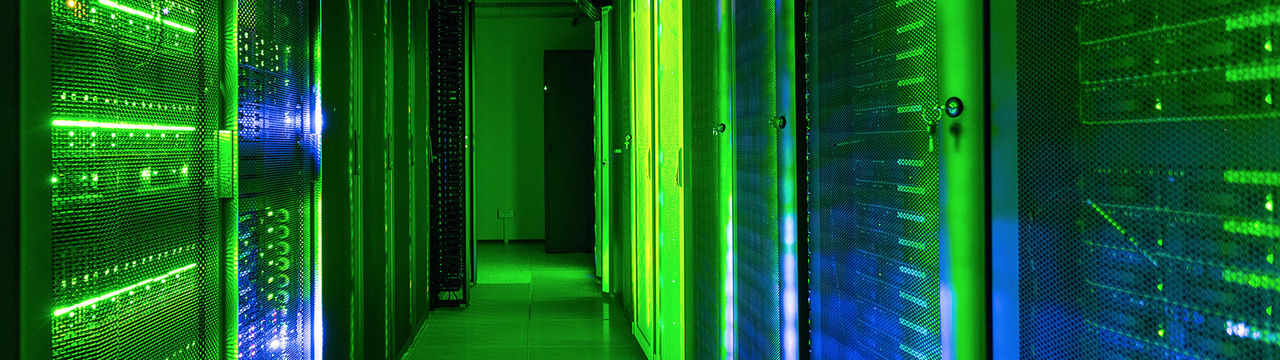

Data center

Learn More About Wesco's Data Center Solutions

Discover how Wesco's data center experts help solve today's toughest challenges - from advanced cooling strategies to scalable, high-performance solutions.


Matt Powers

ABOUT THE AUTHOR

Matt Powers
Vice President, Global Technology & Support Services (TSS)
Matt Powers was named Wesco’s VP of Global Technology & Support Services in 2020. He leads a technology team of global engineers who partner with international teams specializing in supporting complex customer applications. Previously, Powers held the role of VP of Global Marketing Technology.


You might also like