SPONSORED
Closing the Digital Divide: Expanding Broadband Access Nationwide
By Chatsworth Products | January 10, 2025
Read Time: 3 Minutes

Despite the appearance of widespread Internet availability, most Americans in rural areas, and a large percentage in urban areas, do not have broadband Internet access. This digital divide hinders social and economic progress, as communities without broadband face higher rates of poverty and unemployment. To address these disparities, federal and state governments have launched initiatives like the BEAD (Broadband Equity, Access, and Deployment) program. By providing substantial funding, BEAD aims to connect underserved households with reliable internet, driving equitable access to essential services and opportunities. With a range of technologies prioritized, including fiber optics, fixed wireless, and satellite, the program supports infrastructure for an inclusive digital future.
Connectivity Options for Remote Areas
Broadband technology connects communities through various methods, each with strengths tailored to specific geographic and economic needs. Fiber-optic broadband is the "gold standard" in speed, reliability, and sustainability. Capable of delivering up to 100 Gbps over distances up to 100 kilometers, fiber broadband (or FTTX) is scalable and energy-efficient, rapidly expanding in the U.S., with projections reaching 72.8 million homes by 2024.1 Most FTTX networks use point-to-multipoint GPON technology, distributing fiber from central hubs to customer locations. However, fiber’s last-mile deployment can be challenging in rural regions due to installation costs and geographic hurdles.
In contrast, cable and DSL broadband leverage existing infrastructure, making them cost-effective for certain areas. Cable/HFC combines fiber and coaxial cables, providing internet access where fiber alone isn’t viable, with speeds up to 1 Gbps. As technology advances, cable may eventually support 10 Gbps speeds. DSL uses traditional phone lines, providing a more accessible yet slower option, especially for remote areas, with speeds up to 120 Mbps. Although DSL will likely phase out in urban areas, it remains crucial in rural regions.
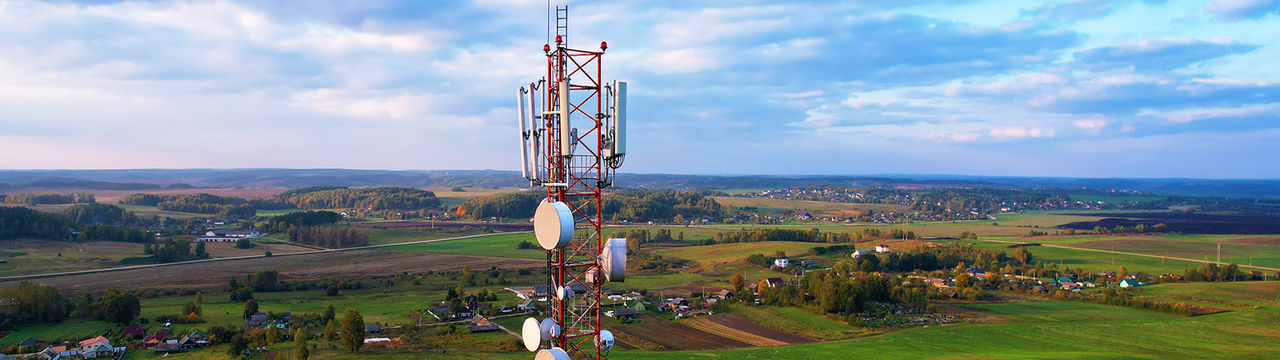
Fixed wireless broadband is another solution for remote areas where fiber and cable installations are impractical. Operating in licensed and lightly licensed spectrum bands, fixed wireless offers download speeds up to 200 Mbps and upload speeds up to 100 Mbps. It provides reliable coverage via 4G or 5G antennas linked to a wired network. The BEAD program funds licensed fixed wireless projects, prioritizing stable connections. In some cases, fixed wireless extends through small cells and DAS antennas, creating robust wireless networks.
While Wi-Fi is widely used, it doesn’t meet BEAD’s broadband criteria due to its reliance on existing networks. Still, public Wi-Fi access points form essential municipal networks, particularly for underserved or low-income communities. BEAD can fund Wi-Fi deployments in multi-family residences, and additional grants support public Wi-Fi for community benefit.
Satellite broadband, enabled by LEO satellites, is essential for the most isolated locations. Though historically slower and costlier, new advancements, like Starlink’s 7,000 LEO satellites, now deliver speeds up to 500 Mbps, with improved latency. BEAD views satellite as an "alternative" technology, funding it where other options are too expensive. Satellite’s universal availability makes it invaluable for reaching the nation’s most remote users.
Connectivity Requires a Diverse Set of Technologies
Each technology, from FTTX to satellite, plays a unique role in bridging America’s digital divide, tailored to different geographies, population densities, and infrastructure requirements. With BEAD support and an evolving technological landscape, these diverse broadband options bring the goal of universal connectivity closer than ever.
As government-backed programs like BEAD roll out, bridging the digital divide becomes achievable. Chatsworth Products remains committed to this vision, providing reliable infrastructure solutions that empower broadband providers to connect communities, ensuring that no one is left behind in today’s digital landscape.
1Fierce Network, April 2024. Analysts predict U.S. fiber subs to double in the next 10 years to 45M, 2024


ABOUT THE SPONSOR
This article was brought to you in partnership with Chatsworth Products.
Chatsworth Products (CPI) engineers innovative data center, enterprise network, and industrial solutions that address today’s critical IT infrastructure challenges. With over two decades of experience supporting Fortune 500 and multinational corporations, CPI is uniquely prepared to protect their customers’ information and communication technology investments.
You might also like
-
Adaptive Reuse Projects Abounded in 2025 March 4, 2026 Adaptive reuse is reshaping construction — turning offices into homes, cutting costs up to 30% and reducing carbon impact. See how these projects revive communities and drive sustainable contractor growth.Article
-
Extended Ethernet Cable Advantages for Modern Networks February 18, 2026 Explore how extended Ethernet cable solutions advance network design and enable PoE, IoT and smart facilities through the partnership of Wesco and Prysmian.Sponsored
-
Industry Insights: AI Inference and the Impact on the Edge February 16, 2026 Discover how edge AI inference is driving higher rack power density and reshaping data center power, cooling and modular infrastructure strategies.Sponsored