


ARTICLE
How Technology Can Help Reduce Retail Losses from Shrinkage
By Chris Rauen | August 27, 2024
Read Time: 3 Minutes
The retail industry has a shrinkage problem, and it’s costing billions.
Shrinkage, or “shrink,” refers to refers to the difference between actual and recorded inventory. It is a measure of inventory losses that’s typically presented as a percentage of sales. In a National Retail Federation (NRF) survey, 22.6 percent of retailers reported a shrinkage rate of 2 percent to 2.99 percent in 2022. Another 13.2 percent reported shrinkage of 3 percent or more. All totaled, retail shrinkage in 2022 amounted to $112.1 billion in losses.
The NRF report focused on external theft, the leading cause of shrink, which accounted for 36 percent of retail losses. Opportunistic shoplifting used to be the primary form of external threat, but retailers report a dramatic rise in violent “smash-and-grab” incidents committed by organized crime groups. In addition to inventory losses, these crimes have forced some retailers to reduce store hours, change in-store product selections, or even close specific locations. Violent crime also reduces customer traffic and makes it more difficult for retailers to hire quality employees.
Shrinkage: A Complex Problem
While external theft is the most alarming cause of shrinkage, it isn’t the only one. Internal theft is a close second, at 29 percent of losses. Another 27 percent is attributed to “process and control failures” — administrative errors, breakage and vendor fraud. A sizable 6 percent is “unknown.”
For retailers, shrinkage puts the squeeze on already thin profit margins. From a consumer perspective, shrinkage means higher prices. Either way, shrinkage can no longer be accepted as a cost of doing business. Retailers need to develop a strategy for addressing the shrinkage crisis.
However, many retailers are struggling to find ways to combat the issue. Part of the problem is that they don’t have current data as to where and why shrinkage is occurring. Many are making assumptions and educated guesses based on industry data. This data doesn’t reflect each retailer’s product offerings, operational processes, geographic locations, and other factors that can affect the root cause of shrink.
Data Is Key to Addressing Shrink
Most retailers have data scattered across multiple systems, making it difficult to perform an in-depth analysis. As an initial step, retailers should collect and aggregate relevant data to gain a holistic view of shrinkage. By analyzing this data, retailers can address process and control failures with operational changes. They can also begin to identify the root cause of “unknown” shrinkage.
Of course, almost two-thirds of shrinkage is the result of external or internal theft. Inventory and point-of-sale data can identify which products are most frequently stolen. Employee schedules and physical security systems can provide insight into where and when theft is occurring. An analysis of data from video surveillance cameras, sensors, and access control systems can show the flow of traffic around frequently stolen goods. This enables retailers to fine-tune their physical security to reduce theft losses and related damages.
The right physical security strategy depends on the root cause of theft. For example, electronic article surveillance devices and RFID can reduce opportunistic shoplifting but are likely to be ineffective against aggressive organized crime. Retailers need a layered approach with multiple systems and controls.
How Wesco Can Help
Developing a physical security strategy requires significant expertise. Wesco has helped some of the world’s best-known retail brands leverage industry-leading solutions to address their physical security challenges. By partnering with Wesco, retailers gain a source of trusted advice from seasoned security experts and access to our global ecosystem of best-in-class contractors, integrators, and installers.
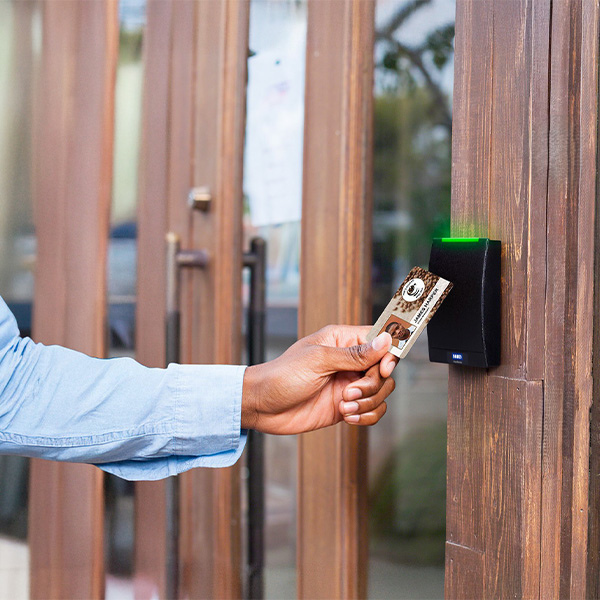
Through a combination of sensors, surveillance cameras, access control, and alarm systems, retailers can reduce theft, recover stolen merchandise, and improve loss prevention. These solutions also allow retailers to analyze incidents and identify potential patterns across store locations in multiple geographies.
Retailers are suffering significant losses due to skyrocketing shrinkage and rising violent crime. Wesco can help retailers combat this complex challenge with expert services and comprehensive physical security solutions.

Our customizable solutions help position retailers for success today and into the future.

ABOUT THE AUTHOR
Chris Rauen
Senior Director, Global Vertical Markets
Chris Rauen has been with Wesco for more than 25 years, holding various leadership positions in sales. His expertise is in providing unique solutions that address customer challenges. In his current role, he is responsible for curating Wesco solutions for key vertical markets in our worldwide accounts program.
You might also like
-
Why A/V Integrators Should Offer Physical Security Solutions December 17, 2025 Professional A/V firms are expanding into cameras, access control and unified security. Learn why demand is rising and how Liberty helps you deliver, profit and scale.Sponsored
-
Examining the Aesthetics of Commercial Access Control November 21, 2025 Aesthetics in access control matter more than you think. From sleek readers that enhance modern spaces to design challenges and evolving options, we explore how visual impact influences client satisfaction, branding and system integration.Sponsored
-
Smart Surveillance for Modern Data Centers: Securing Our Digital World October 21, 2025 Explore smarter data center security solutions from Hanwha Vision and Wesco. Discover how AI-powered surveillance and thermal imaging can help protect your operations, ensure NDAA compliance and give you a competitive edge.Sponsored