SPONSORED
Liquid Cooling for Data Centers: What You Need To Know
By nVent | July 16, 2025
Read Time: 3 Minutes

As the need for data centers continues to evolve in support of AI workloads and high-density computing, new IT and chip technologies are being designed with liquid cooling in mind. New innovations in data center cooling, from sustainable solutions to modular cooling systems, are transforming energy efficiency in the industry – and data centers that only deploy traditional air cooling may struggle to stay competitive and meet the demands of next-generation IT equipment.
Liquid cooling for data centers offers a more effective way to manage heat, improve performance and reduce energy consumption. According to a recent TrendForce report, the launch of NVIDIA’s Blackwell platform and ASIC chip upgrades is set to boost liquid cooling penetration from around 10% in 2024 to over 20% in 2025.
This means that today’s data center managers and IT professionals are tasked with an ever-increasing demand for increased capacity while needing to maintain efficient data center space and energy use. Liquid cooling systems can provide an effective solution. Not only do they help achieve the required temperature parameters of next-gen chipsets, but they also reduce energy consumption, which improves power usage effectiveness (PUE) and presents a favorable return on investment through a lower total cost of ownership for data center facilities.
Energy Efficiency
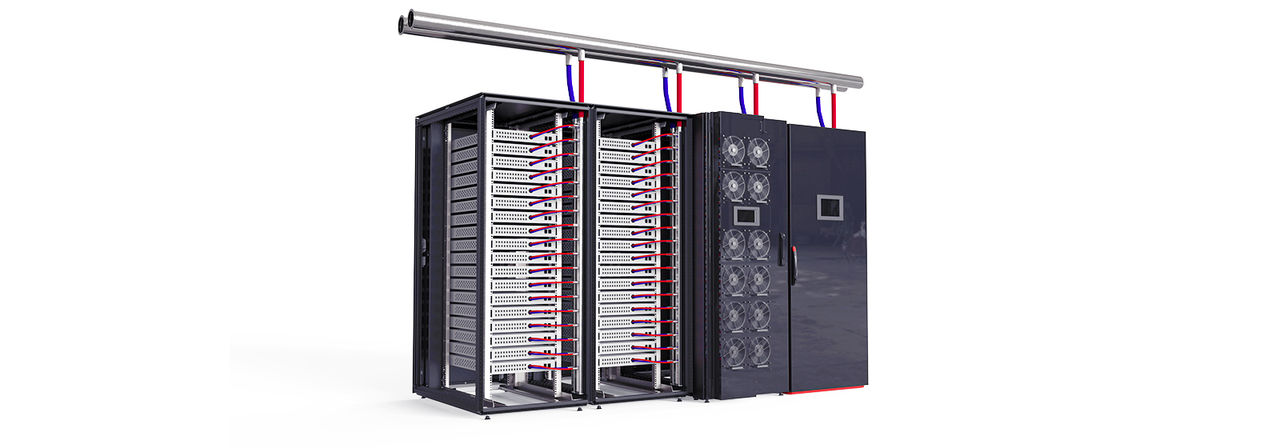
Because liquid is denser than air, liquid cooling provides 3,500 times the heat transfer capacity of air-cooling methods. Direct-to-chip liquid cooling removes heat at the source, easing reliance on air systems and improving power usage effectiveness (PUE).
Ideal for energy efficient data centers, these systems can improve the efficiency of and reduce the need for air cooling. This can result in a significant decrease of overall energy consumption and costs while offering better performance.
Sustainable Cooling Solutions
It’s no secret that high-powered data centers require a lot of power and resources, and as the need for high-density compute continues to grow across almost all industries, identifying and implementing sustainable cooling solutions is critical for mitigating their environmental impact.
Liquid cooling systems – while they may sound water intensive – often use closed-loop designs that minimize water waste and support reuse of coolant. Additionally, increasing chip density can reduce the physical footprint needed for data center expansion, lowering the associated environment costs of construction projects. Renewable energy sources such as solar and wind can also be integrated into cooling infrastructure to further enhance sustainability. These solutions help data centers operate more sustainably and meet environmental goals by increasing PUE, which in turn reduces energy costs.
Building New vs. Retrofitting Existing Facilities
To support the growing demand for high-performance AI applications, data centers must expand capacity. This means data center managers and operators must make decisions about whether to build new facilities or retrofit existing ones. Each approach has advantages and challenges. New builds allow for the latest infrastructure design and high-density cooling technology, but construction projects can be expensive and come with sustainability trade-offs. On the other hand, there are solutions available to help data centers grow their capacity to support AI chips like the H100 GPU without complete facility reconstruction; however, retrofitting existing data centers presents challenges in maintaining uptime and availability throughout remodeling.
Modular Cooling Systems for Scalability
Modular cooling system designs are easy to customize for specific customer requirements. They offer flexibility and scalability, allowing data centers to meet current cooling demands and invest in upgrades incrementally as additional equipment or capacity is needed. By using a modular approach, data center managers can reduce upfront costs while planning for long-term growth.
Cooling System Maintenance Best Practices
Cooling system maintenance is a schedule of periodic inspections of all cooling components; it’s also a perfect opportunity to confirm adherence to safety protocols and compliance with relevant industry standards and regulations. A regular maintenance schedule and continuous monitoring are essential for reliability and efficiency as both can help identify issues early and extend the system lifespan by ensuring optimal performance. In particular, data centers running liquid cooling systems should pay attention to fluid quality and be sure to refresh or clean the fluid in closed loop liquid lines as needed.
Conclusion
Equipping a data center is a dynamic process – often requiring additional new systems. That’s why investing in liquid cooling for data centers provides a strategic edge. With proper planning and cooling system maintenance, these technologies offer a path to scalable, cost-effective and environmentally responsible operations. By adopting sustainable, modular cooling systems, operators can build energy efficient data centers that are ready for the future.


ABOUT THE SPONSOR
This article was brought to you in partnership with nVent.
nVent is a leading global provider of electrical connection and protection solutions. Their products and solutions connect and protect some of the world's most sensitive equipment, buildings, and critical processes. nVent’s robust portfolio of electrical product brands dates back more than 100 years and includes nVent CADDY, ERICO, HOFFMAN, RAYCHEM, SCHROFF, and TRACER.
You might also like
-
The Rise of “Construction-Ready” Supply Chains: A New Model for Data Center Build Speed May 11, 2026 In this EC&M feature, Wesco and Eaton share a new model for speeding data center builds by reducing risk and improving gray space execution.Article
-
Solving Data Center Development Challenges April 14, 2026 Discover key data center development challenges and how Wesco supports data center power requirements and supply chain considerations to keep projects on track.Article

-
Q1 Construction Industry Report — North Central March 23, 2026 Read the Q1 Construction Industry Report — North Central to learn the latest trends, challenges and growth opportunities for the region.Article