ARTICLE
Modular Data Centers: The New Go-To Solution
By Kent Anderson | May 12, 2025
Read Time: 5 Minutes
Modular Data Centers Meet Rising Demands
It is a fact that the demand for data centers is on the rise. The global data center market size, valued at nearly $200 billion in 2022, has been projected to grow at a compound annual growth rate (CAGR) of more than 10% from 2023 to 2030.1 Due to artificial intelligence (AI) and high-performance computing (HPC), power demands are surging, and data consumption and storage needs continue to increase. Businesses are looking for fast and reliable solutions as they aim to manage this growth without interruptions.
While it is not a secret that the demand for data centers is on the rise, it may be surprising to learn that modular data centers are becoming a preferred solution thanks to the deployment speed, dynamic flexibility and high data throughput they provide.
A faster data center deployment enables faster implementation of advanced technologies such as AI and HPC, which can speed ROI and create competitive advantages for businesses. While traditional data centers can take twelve to twenty-four months or longer to complete, modular data centers can be delivered two to three times faster, typically three or four months after the order is placed.
Several factors fundamental to modular construction help ensure faster deployment:
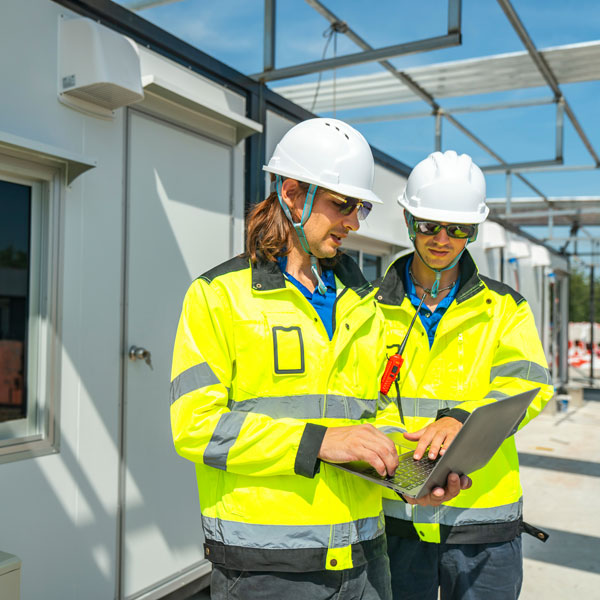
- A simplified and standardized design and build process cuts down on uncertainties, decision-making and construction time.
- Being factory-built ensures the best skilled labor is available when and where needed, eliminating the time and cost of travel to and from remote jobsites.
- Off-site construction allows for concurrent completion of the data center and building work.
- The complete solution incorporates all data center equipment, electrical components and HVAC, avoiding supply chain issues and long-lead times on individual parts.
Dynamic Plug-And-Play Flexibility
Deploying modular data centers can help mitigate the situation that arises when growth happens faster than planning or when careful plans must be tossed aside due to unforeseen circumstances. Modular data centers provide dynamic, plug-and-play flexibility, allowing businesses the freedom to pivot and still meet project demands without sacrificing quality or reliability.
Let’s look at some scenarios where a flexible option can save the day:
- A natural disaster or security breech occurs, and the data center needs to be moved to a different location temporarily:
- A modular data center can be reliably transferred with ease and then transferred back when the site is ready again.
- A new business division is acquired, and its infrastructure is not equipped to handle the modern technology required by the new headquarters:
- Modular data centers can be ordered one at a time, as needed, to avoid an unexpected large capital expenditure.
- Businesses can even keep a specification on file with manufacturers to speed up the process and take the guesswork out.
- A global pandemic hits and hospitals are maxed out on space, but they require data center upgrades to handle their increased data output:
- Modular data centers can be deployed exterior to the building, managing the increased power demands, while saving critical space for patients.
High Data Throughput, Low Latency
Modular data centers do not sacrifice reliability and quality for deployment speed and flexibility. They are designed with resiliency and redundancy in mind. Backup generators, cooling systems, fire suppression and monitoring tools all work together to mitigate risk and minimize downtime. Just like traditional data centers, modular data centers go through rigorous testing and certifications for compliance to standards. Because they are built to handle processing power onsite, they often provide higher data throughput, lower latency and increased privacy compared to cloud computing options.
High data throughput, while always of key importance, is becoming even more crucial today as advanced technologies with complex computations are more prevalent. Even minor delays in data transmission can cause major issues in modern applications with robots and automation.
What Modular Data Center is Right for Your Business?
Modular data centers can be a great go-to solution for businesses to have in their back pocket – reliable and ready to deploy when needed. While fast in comparison to building a traditional data center, it does take some initial research and design, especially on the first purchase. A supply chain solutions provider can help streamline the project from initial concept to finding the best manufacturer to a successful implementation that is optimized for today and tomorrow.

ABOUT THE AUTHOR
Kent Anderson
Senior Business Development Manager, Wesco
Kent began his career with Wesco in our Manufactured Structures division and has since held positions in administration, sales and management. In 2019, he helped establish a business development team focused on offsite construction, retail/commercial and specialty vehicles. Kent sits on the Modular Building Institute Board of Directors and serves as treasurer.
Improve productivity
Improve productivity, mitigate risk and increase profitability on your modular data center implementations by partnering with Wesco.
You might also like
-
The Rise of “Construction-Ready” Supply Chains: A New Model for Data Center Build Speed May 11, 2026 In this EC&M feature, Wesco and Eaton share a new model for speeding data center builds by reducing risk and improving gray space execution.Article
-
Solving Data Center Development Challenges April 14, 2026 Discover key data center development challenges and how Wesco supports data center power requirements and supply chain considerations to keep projects on track.Article

-
Q1 Construction Industry Report — North Central March 23, 2026 Read the Q1 Construction Industry Report — North Central to learn the latest trends, challenges and growth opportunities for the region.Article