Data Centers
Growing at an Annualized Rate of 38.5% Through Q2 2026


ARTICLE
March 17, 2026
Read Time: 3 Minutes
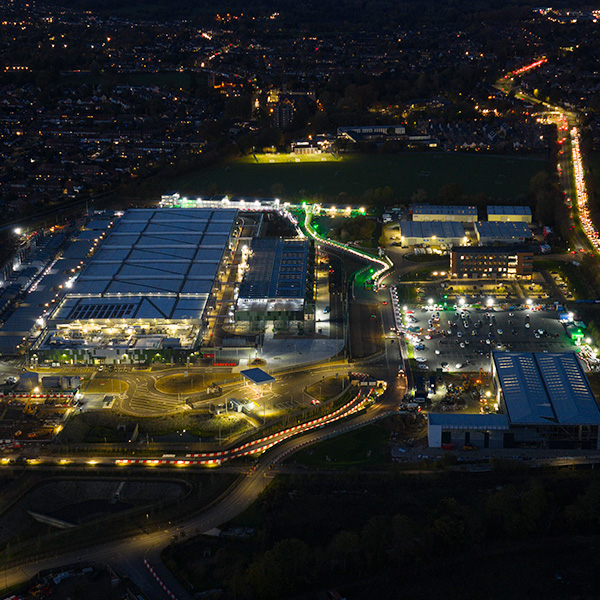
Construction priorities are shifting due to social, economic, technological, geopolitical and policy forces. Emphasis is moving from sustainable energy to data centers and supporting infrastructure as AI and hyperscale computing rapidly expand. Although overall U.S. construction spending is declining in the near term, data center and civil construction are growing, education remains steady and industrial activity is increasingly focused on modernization. Contractors can find opportunities by adapting strategies to target resilient sectors such as civil, education and healthcare and by using data to anticipate market shifts.
Growing at an Annualized Rate of 38.5% Through Q2 2026
+32.4% Growth Year Over Year from December 2024 to December 2025
With a tech industry focus in the Pacific Northwest, data center construction is growing and leading to a boost in non-residential specialty trades, especially electrical work.
Persistently high interest rates and inflation continue to suppress overall construction spending.
Despite slower overall job growth, demand for certain skilled trade workers (like electricians) continues to intensify, pushing wages higher.
Digital tools like building information modeling (BIM), drones, 3D printing and automation are essential to improving efficiency, closing labor gaps and managing increasingly complex projects.
The office sector has been particularly challenged by weakened demand driven by the shift toward hybrid and remote work models. Consistent with national trends, many stakeholders in the region are taking a cautious “wait-and-see” approach to their projects.
Uncertainty around labor and material availability, combined with challenges securing state funding, has led to project slowdowns, with some developments paused or placed on hold.
Economic pressures like inflation, elevated interest rates and higher material costs are dampening growth, contributing to potential job losses in some areas while increasing demand for skilled trades such as electricians.
U.S. copper mining expansion is a slow, complex process that often takes 10–20 years because of permitting, environmental and construction constraints.
Investment is focused on the region’s highway and rail infrastructure, while continuing to support energy projects in Alaska and Wyoming.
Nonresidential, tech-driven work is expected to increase.
Associated Builders and Contractors (ABC) data points to a mixed outlook, with strong demand for data centers serving as a key driver.
While demand for traditional office space continues to decline, there is renewed interest in high-end offices and other commercial properties, including apartments, warehouses, retail and hotels.
Industrial construction is projected to reach $17 billion in 2027, indicating a shift toward efficiency improvements and modernization projects over new facility builds.

Learn more about our data center solutions backed by our scale, expertise and hands-on support.
1 ABC: Construction Industry to Face 'Real Risks' in 2026, Engineering News-Record, 2025
2 Institute of Trends and Research (ITR)
3 Seattle Office Market Report, Kidder Mathews, 2025
4 National Electrical Manufacturers Association (NEMA)
5 Construction Economy Snapshot, ConstructConnect, 2026